
The Vermont Difference
Taste the Terrain
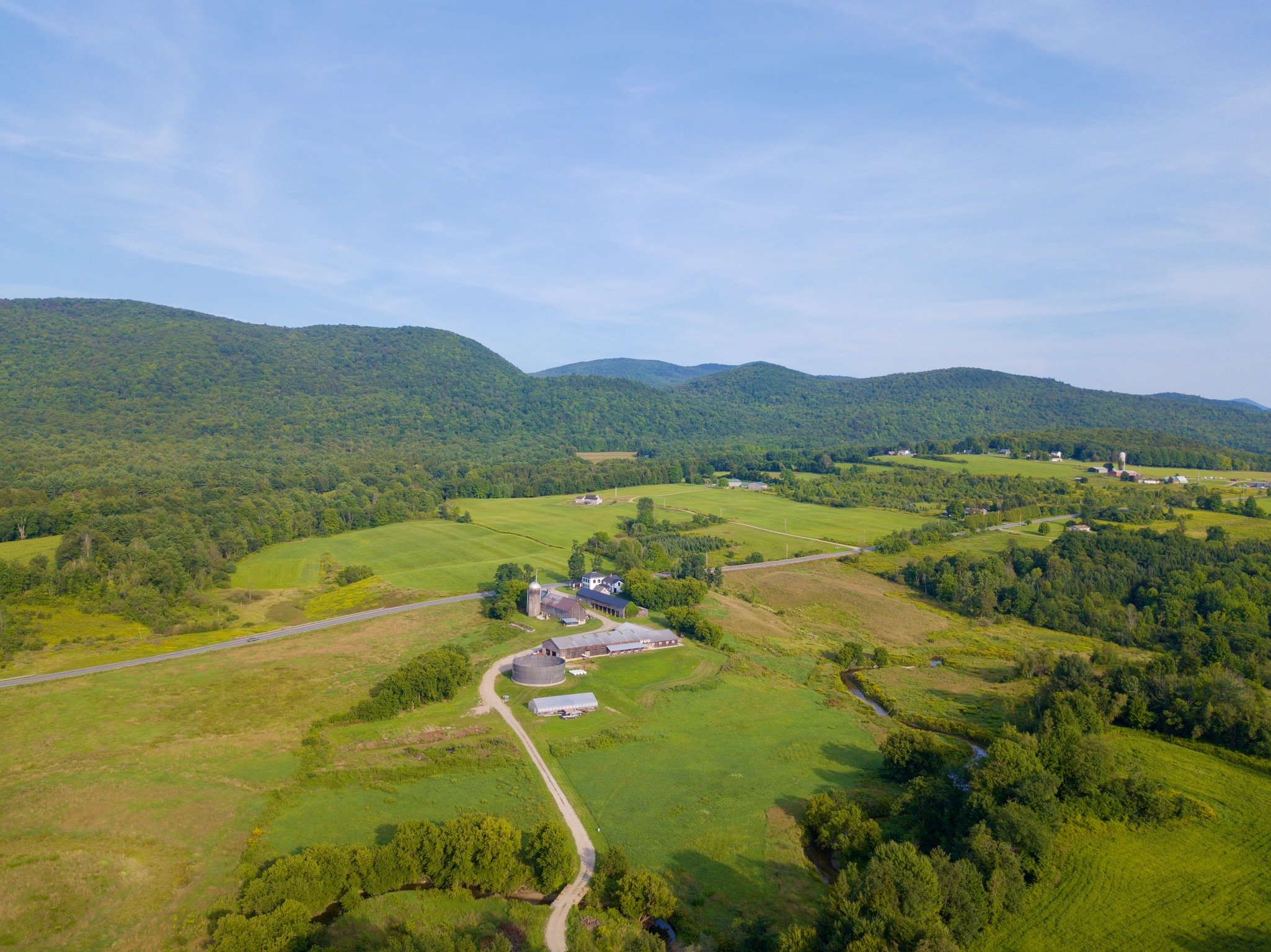
We love Vermont for its stunning landscape, spirit of ingenuity, and irrepressible sense of community. Vermonters like to do things their own way, and create things that are totally unique. In this beautiful, rugged landscape, our rich legacy of local, responsible agriculture has created a reputation for quality and integrity recognized worldwide.
Vermont Hops. Vermont Flavor.
It all starts with our landscape (often referred to as terroir). Soil, topography, and climate—just as in the wine world—have an incredibly important role to play in the growth and sensory profile of hops. While hop terroir isn’t currently afforded the prestige that’s credited to vineyards, the explosion in craft beer production means that it’s quickly becoming recognized as something worthy of equal attention and appreciation.

So, why are our Vermont-grown hops so unique?
-
We grow public hop varieties, not proprietary ones. Public varieties have been developed in university breeding programs in partnership with the USDA, whereas proprietary varieties are engineered by large hop companies who exact full control over the growing of their intellectual property. Since their development in the Pacific Northwest, the public varieties we grow have launched the craft brewing revolution, including spurring creation of the first IPAs, and become bedrock varieties of the industry. Now, we’re growing these same varieties in Vermont’s terroir, which provides an exciting opportunity to see (and brew) them in a new light! Find out more by reading about the Vermont Hop Project.
-
We’re an owner managed farm. Simply put, we believe that local, sustainable farming creates a better product. In the large-scale, monolithic hop industry, there’s a lot of homogenization. That’s due to multiple factors: the tight control over IP, the similarity in terroir/growing practices between so many farms in a single region, and physical blending (or selecting) of hops in order to create a certain sensory profile. The few massive companies who control most of the industry leverage their scale to develop new proprietary varieties on a regular basis, but this model erodes the ability of small nearby producers to compete with something truly distinct. Having so many hop farms concentrated in one area inevitably produces largely similar crops, since the terroir and growing practices are hard to distinguish.
-
We work with our terroir, not against it. Homogenization isn’t just a result of the standard hop industry business model, it’s also an intentional stage of the production process. Even in the same region, 20 different farms growing Cascade will still get 20 slightly different harvests. All those variations are ironed out, since big producers homogenize hops from many different farms (or select out certain crops) when they’re made into pellets. This gives them very reliable consistency, but at the expense of character and terroir. Large-scale winemakers often do the same thing, creating blends to satisfy a specific market instead of capitalizing on the distinct character of the grapes. So, these producers are compensating for the differences in the landscape, and working against their terroir, rather than working with it.
-
We want to taste Vermont in all our hops and celebrate what makes them unique—that’s why we think growing them in Vermont is so exciting! We’re taking the industry standard varieties and growing them in a decidedly non-standard way. Our farming practices are aimed at doing as little as possible to interfere with our landscape and soil, while reaping the benefits of its distinctive character. The result is world-class quality hops, with a distinctive flavor profile you won’t find anywhere else in the world.
Vermont’s Hop Past

Throughout most of the 19th Century, hops were one of Vermont's largest agricultural crops.
Vermont was actually the second-largest producer of hops in the U.S. after New York! According to the agricultural census of 1860, Vermont's biggest year for hop production, the state produced a total of 638,657 pounds of hops. To put that in perspective, it would take more than 600 acres (more than 12x the current amount) in production at today's yields to produce that quantity of hops here in the Green Mountain State.
Hop growers in Vermont were forced to wind down their operations due to the state’s early adoption of Prohibition. Without modern-day knowledge of pest management, farmers also struggled with plant disease, especially since hops grown out West were less susceptible to failure. In fact, California’s hop industry was actually started by a Vermonter!
After Prohibition, the industry re-established itself almost entirely in the Pacific Northwest, and hops have only recently begun to be grown in New England again.
Vermont’s Hop Future
As the largest hop farm east of Michigan, Champlain Valley Hops is proud be a part of the re-emergence of Vermont’s historic hop industry—and we’re just getting started!
Craft beer production in the U.S. has more than tripled since 2007, and over the same period, craft brewers increased their average use of hops in each barrel of beer by 72%! To a large extent, that’s because hops are now used extensively for aroma as well as for bittering.
Currently, 99% of hops produced in the USA are grown in the Pacific Northwest-ID, WA, and OR, specifically. That means that nearly all the hops used in Vermont’s vibrant local beer industry are not produced locally. It also means that across the country, the hop industry is overwhelmingly homogenous—unlike Vermont beer producers!
Vermont is home to more brewers (and produces more barrels of beer) per capita than any other state. Vermont breweries made nearly 400,000 barrels of beer in 2021. That means they used ~1.1 million pounds of hops! If all those hops were grown locally, it would support 1,000+ acres of Vermont farmland.
Currently there are less than 50 acres devoted to hop production statewide. At 37 acres, Champlain Valley Hops makes up the overwhelming majority of that area. It’s time to grow more Vermont hops!
At a time when Vermont’s farming population is aging rapidly, not to mention the steady decline of our state’s dairy industry, Vermont brewers have a huge opportunity to take advantage of the craft boom and create beers that are grown here, not just brewed here! This will strengthen our local farming community and provide high-quality, sustainable hops that further enrich Vermont’s beer reputation.